
“The white-water outfitter Eric Hertz spent a lifetime searching for the perfect river. In 1990, he finally found it, in Patagonia. Intrepid kayakers who had ventured into southern Chile said that the Futaleufú River could not be rafted. But Hertz made an expeditionary first descent in 1990 and figured out how to safely navigate what today is the most intensive stretch of commercially rafted white-water rapids in the world.”
— The New York Times, May 9, 2006
Earth River Expeditions completed the first full raft descent of the Futaleufú River in February 1990, opening it to commercial rafting the following year. This is Eric’s first-hand account of that expedition and the history of how the Futaleufú became the world’s premier whitewater rafting destination.
With some trepidation, I watched the original Terminator Rapid video, which marked the end of the first attempt to raft the Futaleufú. Like a giant yellow beach ball, one of the fully loaded 22-foot rafts was swept into the center of the river, where it slammed into a recirculating wall of water and came to a violent halt, thrashing and spinning for 30 minutes before finally being let go. Stripped down to the tubes, the limp raft floated helplessly downstream. The rapid, aptly named Terminator, marked the end of Steve Currey’s 1985 attempt to raft the wild Patagonian river with the melodious name few had heard of, and even fewer could pronounce.
News of that aborted first attempt spread in the river community, and it was assumed that the river could not be rafted, certainly not on a commercial basis with paying clients. Steve’s Provo, Utah–based company, Currey Expeditions, had successfully navigated the river’s upper reaches and nearly a dozen rapids, but the lower half, including the now-renowned Bridge-to-Bridge day-trip stretch and 14 additional major rapids, remained an enigma to the rafting community for another five years.
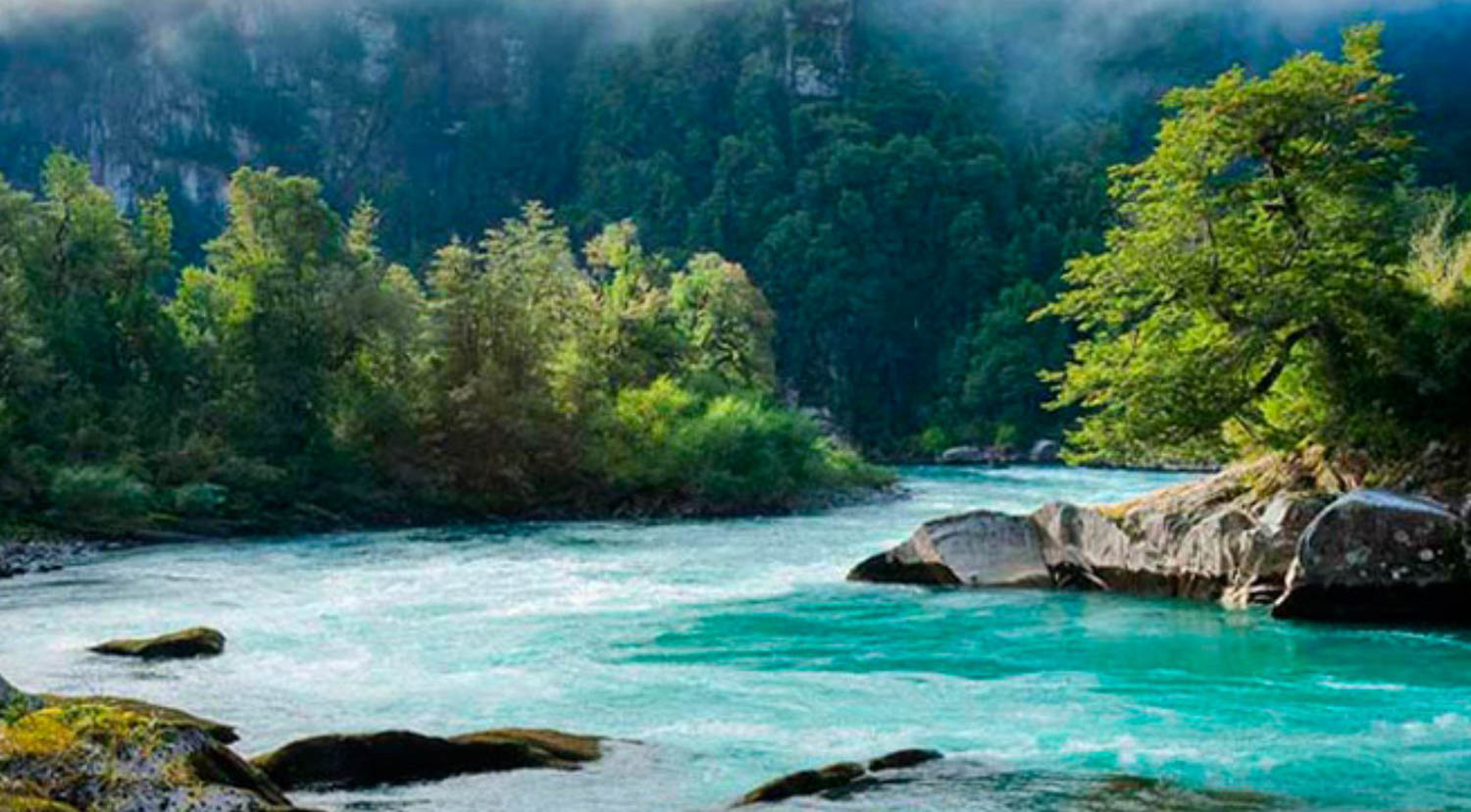
The month before I watched Steve’s Terminator video, I was in Northern Patagonia scouting the same “unraftable” river. I marveled at the swirling turquoise water from a bridge, where a sign read, ‘Futaleufú, un paisaje pintado por Dios’ (‘A landscape painted by God’). The road sign’s message intrigued me and further piqued my imagination. As I drove up the road, I was amazed by the valley’s stunning beauty. The road followed the river for the first few miles, and I stopped multiple times to examine different rapids. They looked daunting, but I could see possible routes through them and decided to launch an exploratory trip the following February.
Was the Futaleufu River raftable? Only another attempt would tell.
When I returned to the US, I contacted Steve Currey about my plans. He was extremely pessimistic:
“Eric, forget it. It’s a waste of time. The thing’s been sitting there for five years. If the river had any commercial promise, I would have returned.”
He explained that their fully loaded, 22-foot, self-bailing rafts were an advantage when breaking through the giant waves in the constricted upper canyon, but they required Herculean strength to control in the rocky, technical rapids of the lower section, such as Terminator. I invited Steve to join the expedition, but he declined and sent me a video from his trip that included the Terminator debacle. “Watch the video,” he said, “and see if you’re still interested.”
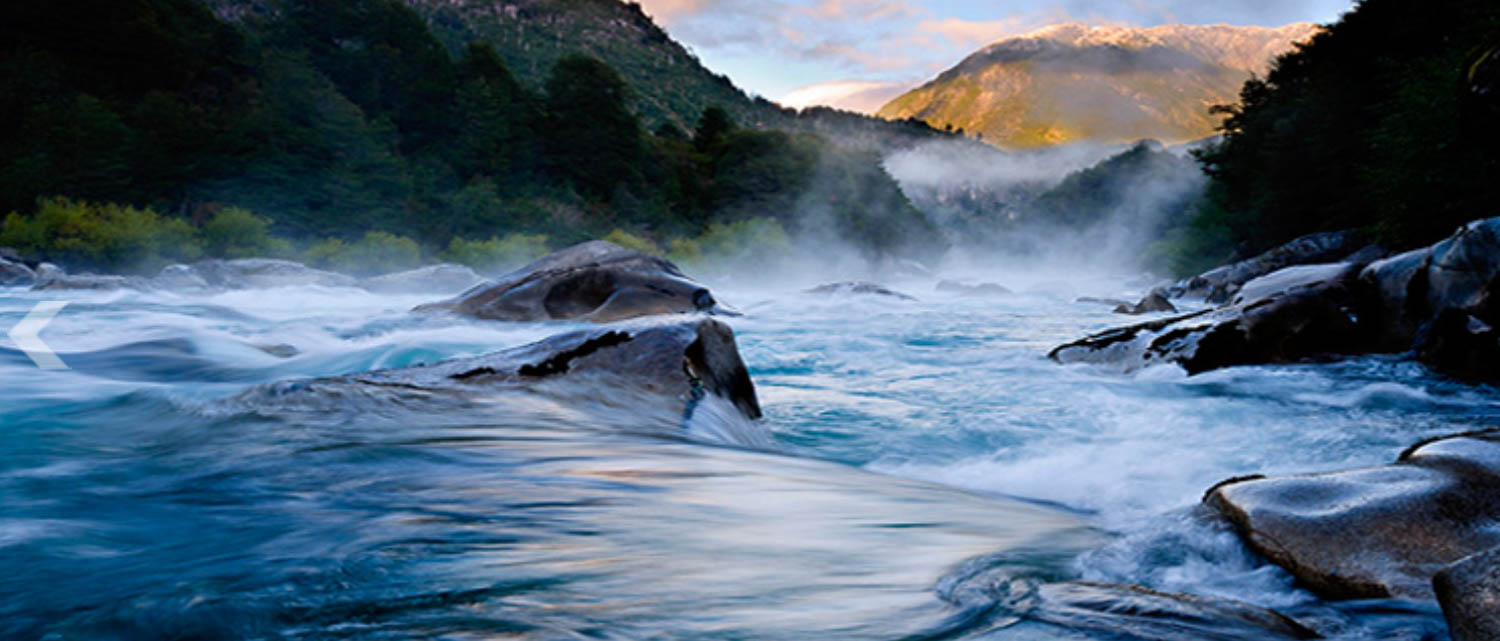 Image: Rocks, holes and whirlpools litter class 5 Terminator Rapid.
The 1995 Terminator Rapid incident that ended the first attempted Futaleufu raft descent
There were four rafts on their attempt, rowed by an experienced team consisting of Steve Currey (trip leader), Peter Fox, Dan Bolster, and Brad Lord. The fully loaded oar boats had people holding on and looked more like something you’d see in the Grand Canyon. The grainy video and dark, gloomy weather gave the river an ominous feeling. In Terminator, Brad’s boat was slightly offline and surfed out to the center, where it slammed into a giant wave of recirculating water and was thrashed for what seemed like an eternity. I couldn’t tell from the video but apparently everyone was rescued. As daunting as Terminator appeared, I was undeterred. With light, maneuverable boats and trained client paddlers assisting the oarsmen, I thought it might be possible to run commercial trips. Seeing the entire river was the only way to know.
In early February of 1990, Earth River launched an exploratory trip on the Futaleufú with two oar-paddle-assisted rafts, guided by Randy Michaels and me. Chris Spelius, whose company Expediciones Chile had been offering expert kayakers trips down the river for a few years, was the lead safety kayaker. Each raft had four paddlers, consisting of intrepid paying clients and training guides. Baggage was kept to a bare minimum. At the last minute, Steve Currey decided to fly down and join the expedition, but because of back issues, he would only be part of the land team.
While we were scouting the first major rapid in Inferno Canyon, Chris mentioned that he was curious to see how the rafts would handle the bigger rapids of the ‘Futa.’ He had his doubts, as did other outfitters at the time. Having kayakers along who were familiar with the river proved to be an advantage. Even so, rafts and kayaks often take different routes, and Randy and I spent hours scouting rapids. The rafts made it through Inferno Canyon and down to the unnavigable Zeta Rapid without any incidents. Zeta was a mandatory portage; the entire river squeezed through a dangerous, undercut, Z-shaped slot.
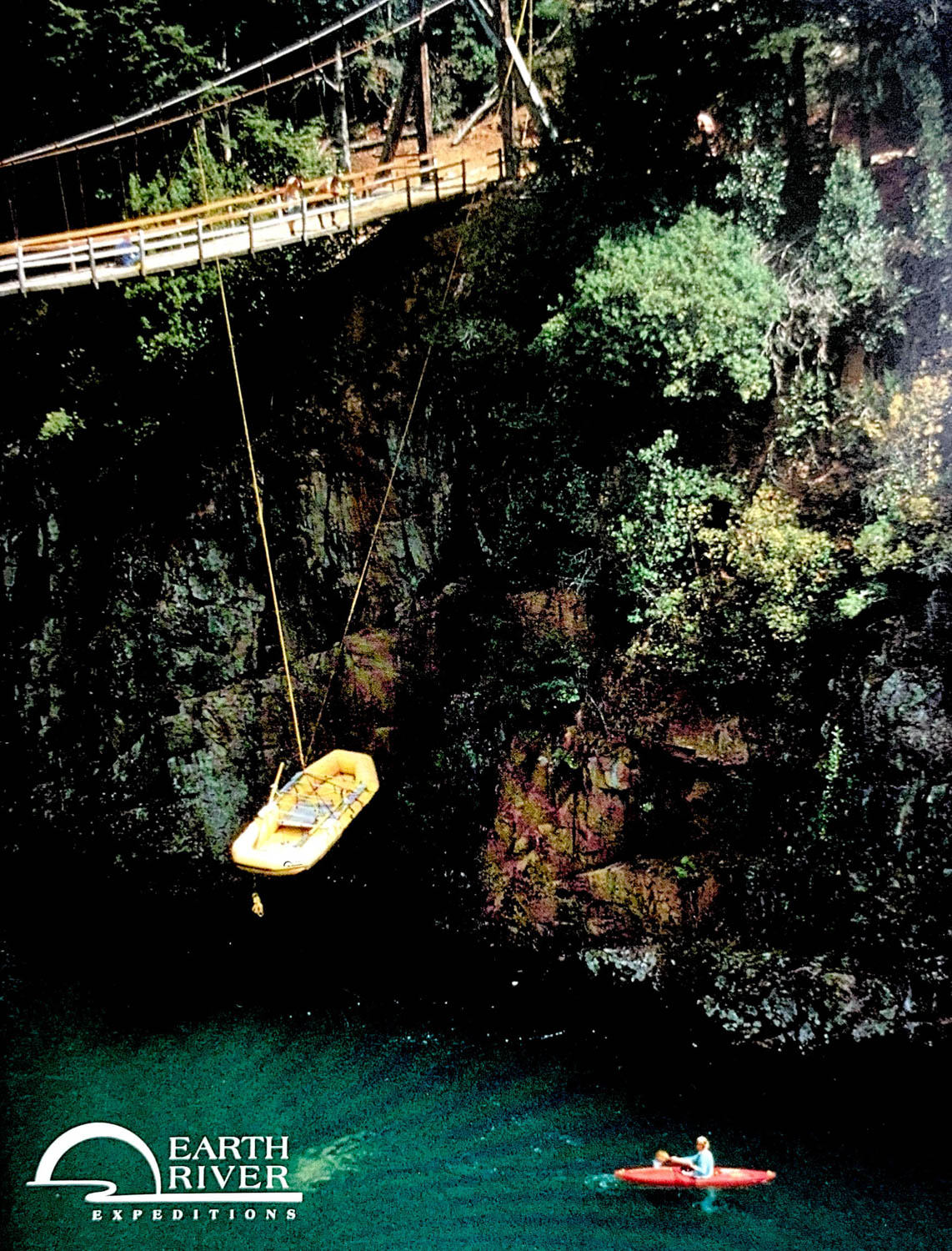 Image: Put in (start) first raft Descent. (Earth River’s 1990 brochure cover)
Portaging class 5+ Zeta Rapid may have been almost as dangerous as running it.
Randy and I decided to “Ghost Boat” the rafts, carry the gear around, and push the empty rafts through. One raft made it to the bottom, but the other flipped and got stuck in a carved-out pocket in the right wall. If the boat could not be freed, the expedition would end there. Steve had mentioned a similar incident during his 1985 expedition. He told me that they took so long to circumvent the rapids that they were forced to camp there.
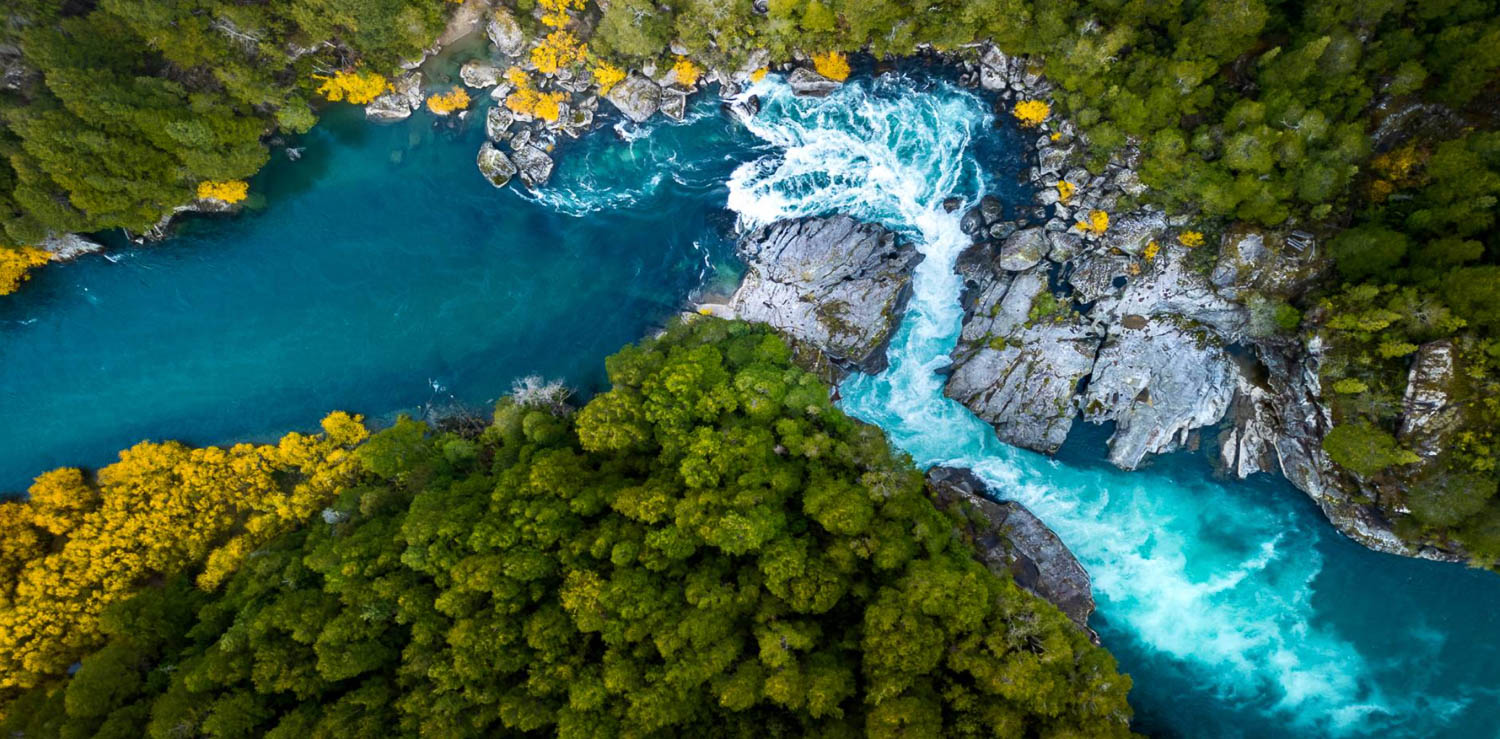 Image: Zeta Rapid (Our raft was stuck in the indentation below bare rock on river right.)
With the aid of ropes, Chris and I climbed down the 50-foot wall and jumped on top of the bobbing, upside-down raft. The plan was to flip the boat back over and row it out of the eddy. We attached a flip line to the side and stood on the edge, ready to pull the upside-down boat back over, when I noticed the water below disappearing under the wall and reemerging 30 feet downstream. Ending up in the water after the boat flipped over and getting sucked under the wall was committing suicide. I alerted Chris to the water flowing under the wall, and the plan was aborted. Two hours later, we finally freed the raft by attaching a throw rope to the bow and tossing it to Randy on the opposite shore, who then pulled it out.
With the exception of a near-flipped raft that dumped everyone but Randy out in a nondescript rapid we named ‘Asleep at the Wheel,’ the rest of the upper river down to the infamous Terminator Rapid, went smoothly. Below Terminator, we successfully negotiated over a dozen major rapids, including: Mundaca, Más o Menos, Casa Piedra, and I was convinced of the river’s commercial potential.
Note: I’ve never heard of another raft getting stuck in the middle of Terminator Rapid, like the incident that cut short Steve Currey’s first attempt 40 years ago, most likely because today’s boats are lighter without gear, and paddlers now assist the oarsman.
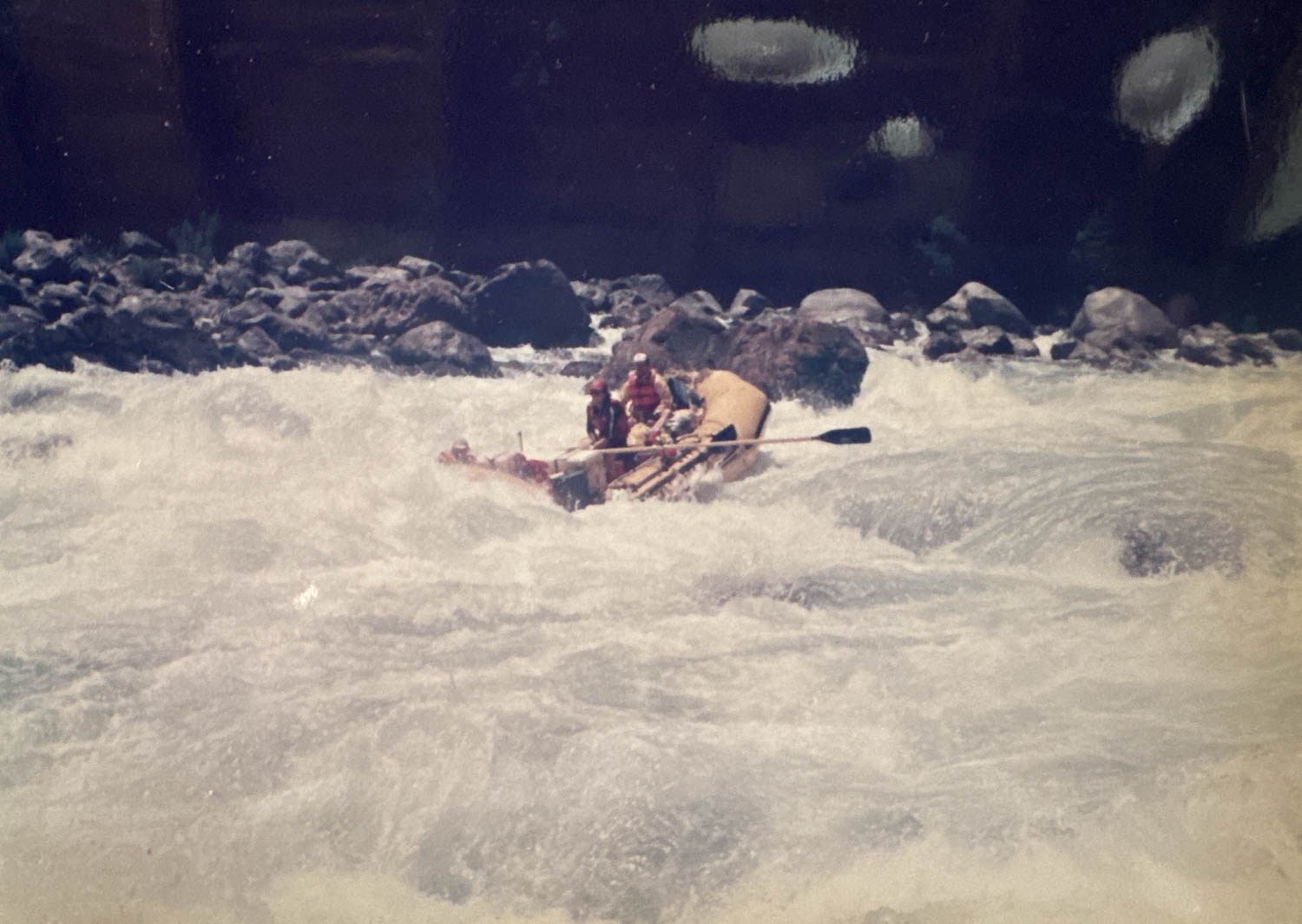 Image: Author guiding on the BioBio River in Chile, circa 1989.
From obscurity, the Futaleufú River has emerged as one of the world’s most sought-after rafting destinations.
The following January (1991), we returned to the Futaleufú with two commercial groups. In 1992, we installed a water gauge to establish high-water safety cut-offs. Bio Bio Expeditions scouted the river in 1993 and began offering commercial trips. Then, in 1994, we introduced a major safety innovation to the river: the ‘Safety Cataraft”.
There are now over a dozen whitewater rafting companies operating on the Futaleufú River in Chilean Patagonia. The majority are local Chilean companies running the world-famous “Bridge to Bridge” day-trip section, first pioneered by Earth River Expeditions in 1990, which accounts for 90% of the river’s rafting traffic. The remaining 10% are eight-day trips. When Earth River first opened the Futaleufú to commercial rafting in the early 1990s, the journey took over a week, with guests spending more time waiting in rafts during scouting than actually paddling. As guides memorized the rapids and learned to read the water levels, the river run condensed to three days, which wasn’t long enough on its own for people to travel all the way to Patagonia to run. By fortunate geography, the Futaleufú Valley offers a remarkable range of additional world-class adventures alongside the river: hiking, canyoning, horseback riding, fishing, mountain biking, and inflatable kayaking (also called “duckies”). Originally marketed as a Class V (Grade 5) expedition suitable only for young, fit, experienced whitewater rafters, the trip today is offered as a Class IV (Grade 4) multi-sport week with a Class V option, accessible to virtually anyone from age 8 to 80 with a spirit for adventure. Rafting has replaced ranching as the largest industry in the area. The publicity generated by the river has also proven to be the most important deterrent to proposed mines and dams.
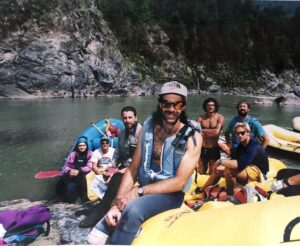 Image: Futaleufu first descent rafting guides: Randy Michaels (center foreground) & Eric Hertz (behind left)
Historical Note:
Correcting a persistent misnomer: the Futaleufú was not scouted as a replacement for the Biobío
The Biobío River in Chile was one of the great rafting rivers in the world until it was dammed in 1993. It is frequently and incorrectly stated that the Futaleufú River was explored as a replacement destination after the Biobío River in Chile was dammed. This is false, and the timeline makes it unambiguous.
Steve Currey first encountered the Futaleufú in 1970, as a teenager on a Mormon mission in Chile, nearly a decade before the Biobío was ever commercially run by rafters, and 25 years before any dams on the Biobío were proposed. He returned to run the Futaleufú in 1985, five years before the Chilean Congress even approved the Biobío dam project. The Futaleufú was on Currey’s radar long before the Biobío was under any threat.
My own return to the Futaleufú in 1990 was equally unrelated to the Biobío’s fate. My sole motivation was finding an additional destination for Earth River guests after that did the Biobio. At that point, the Biobío dams had been proposed but were years from construction, and I was actively working with NGOs, including Grupo de Acción por el Biobío (GABB) and the Natural Resources Defense Council (NRDC) to stop them entirely. I believed we could. Scouting a replacement was not a consideration because abandoning the Biobío was not a consideration.
About the Author:
Eric Hertz organized and led the first complete raft descent of the Futaleufú River and is credited with introducing commercial rafting on what is now considered the world’s premier whitewater destination. He established the foundational infrastructure of the river’s rafting operation: scouting and setting the raft lines through its rapids, naming many of them, installing the high-water safety gauges, and pioneering the safety protocols still in use today, including his invention of the safety cataraft, a craft designed specifically to manage the river’s powerful Rapids. Hertz’s company, Earth River Expeditions, has operated commercial rafting expeditions on the Futaleufú continuously since 1991.