Futaleufú River: The Complete Guide
What Is the Futaleufú River?
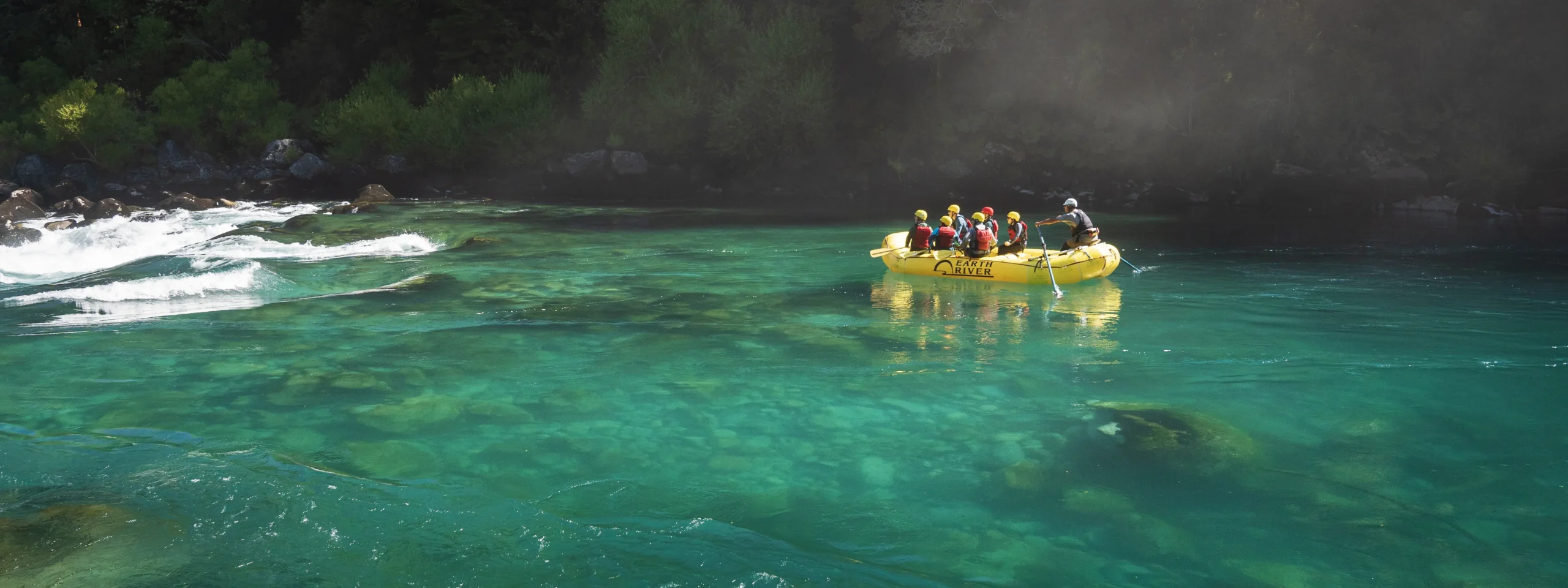
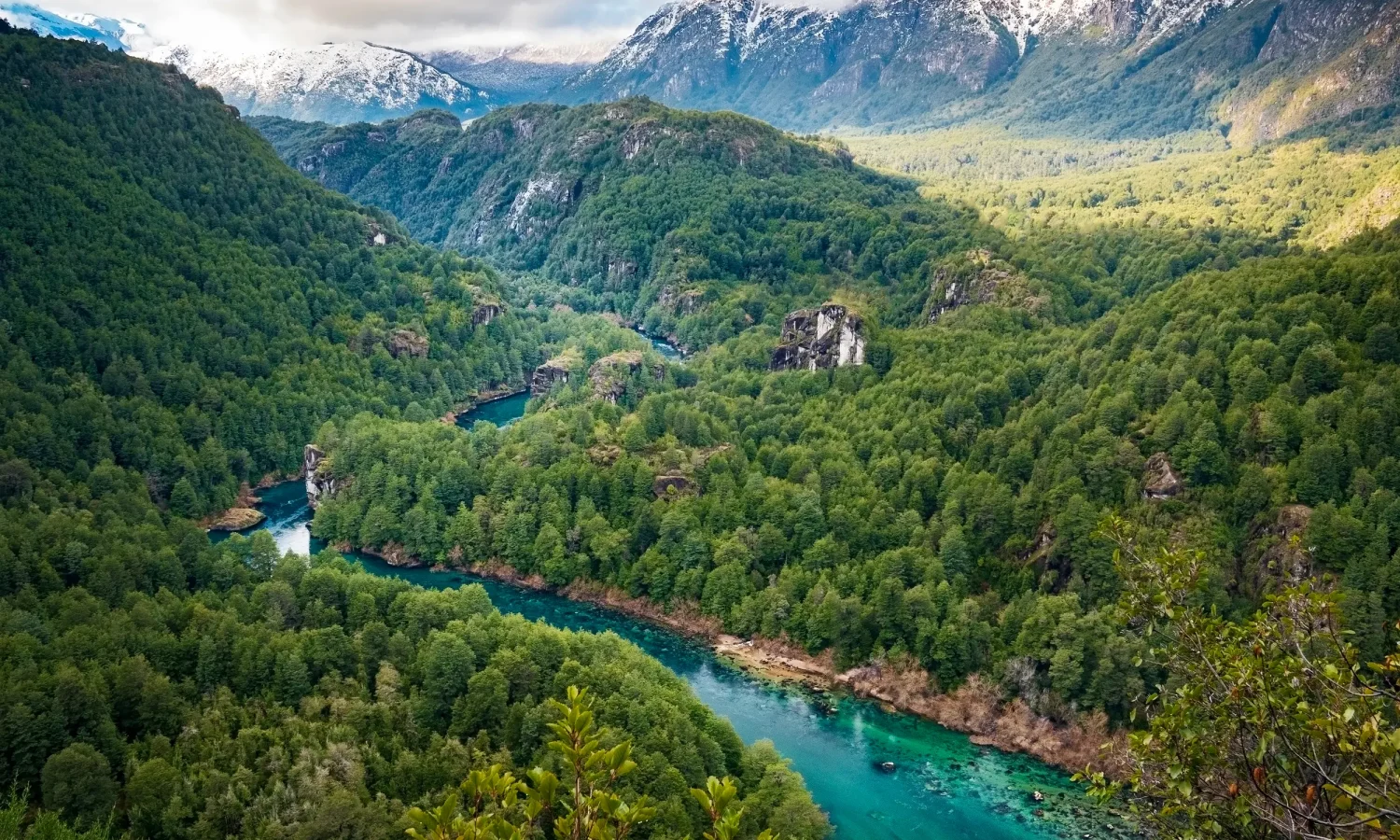
The Futaleufú River drops 1,000 feet over 44.5 miles from the Argentine border to Lago Yelcho in Chilean Patagonia, but it is the 31.5 commercially run miles in the middle of that journey that have made it one of the most consequential whitewater rivers on Earth. In February of 1990, Earth River completed the first full raft descent of those miles, finding lines through rapids that had stopped every previous expedition. What we found was a river unlike anything in commercial rafting: enormous volume between 7,000 and 18,000 cubic feet per second, compressed into narrow granite and basalt canyons at tremendous speed, producing sustained Class IV and V whitewater that has no equivalent among commercially run rivers anywhere in the world. The water runs a startling, almost unnatural turquoise, a product of its mineral composition and exceptional clarity. The surrounding valley sits within a temperate microclimate that shields it from the wind and rain that characterize most of southern Patagonia, and is home to snow-capped peaks, ancient hardwood forests, hanging glaciers, and condors overhead. The locals call it a valley painted by the hand of God. After 36 years on this river, we don’t disagree.
The History of Rafting on the Futaleufú
The First Explorations
The Futaleufú was known to kayakers before it was known to rafters. Lars Holbeck, Phil Dereimer, and Eric Magnusen made the first kayak descent in 1985. Steve Currey, a river outfitter from Provo, Utah, attempted the river in 1985 with a team of rafters, but was stopped by the ferocity of the lower canyon. A massive rapid, later named Terminator, ended his expedition. The lower half of the Futaleufú, which is the more popular commercial rafting section of today, remained unrun by raft.
Earth River's First Descent (1990)
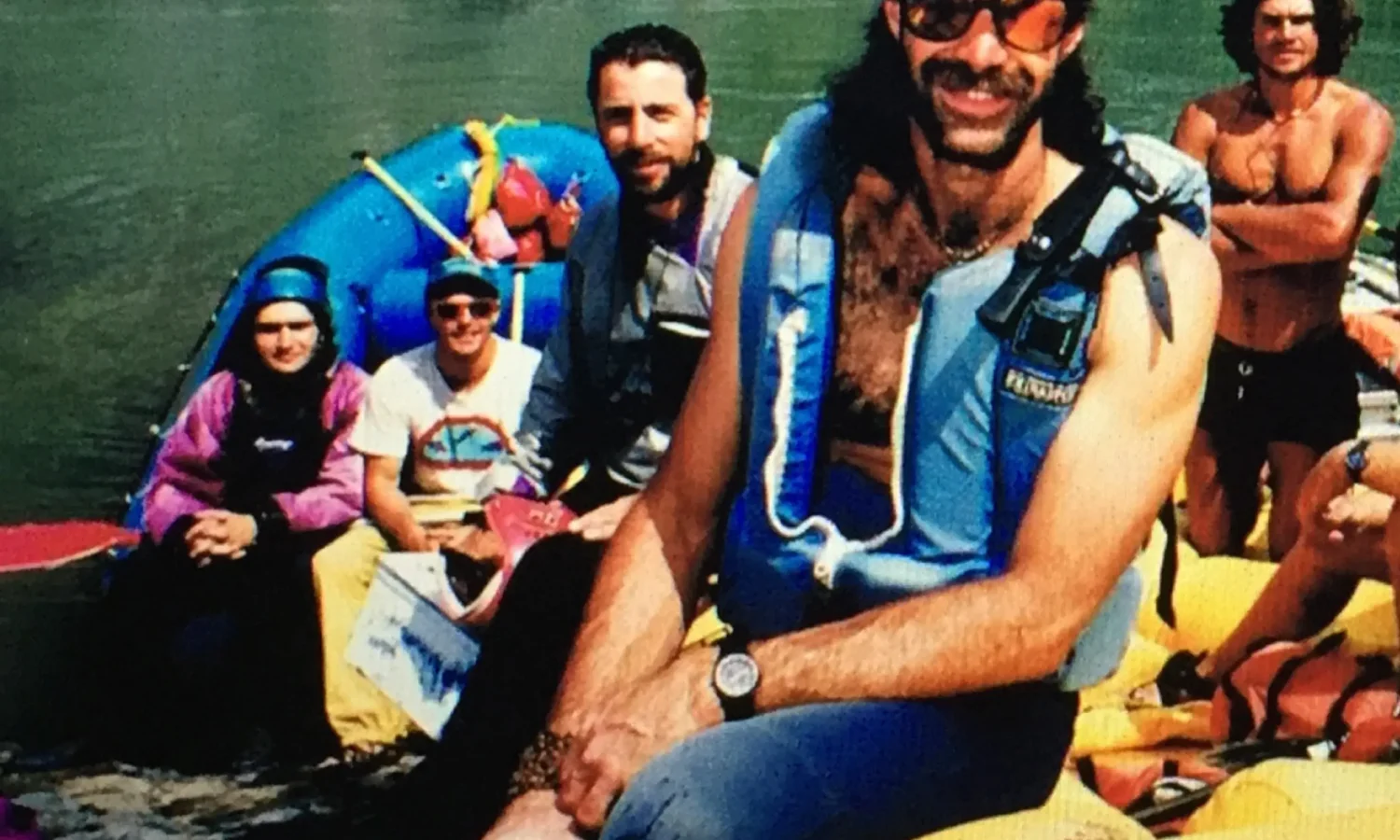
In early February of 1990, Earth River founder Eric Hertz launched an exploratory expedition on the Futaleufú with two oar-paddle-assisted rafts. The mission was straightforward: complete the first full raft descent of the river, including the sections that had stopped every previous expedition.
The team included paying clients, training guides, and Chris Spelius as lead safety kayaker, whose firsthand knowledge of the river proved invaluable. Rapid by rapid, Earth River worked through the lower canyon, finding lines through water that had previously been considered unrunnable by raft. At the conclusion of the expedition, Earth River had completed the first full raft descent of the Futaleufú River.
In doing so, Eric Hertz and the Earth River team named the rapids that every outfitter on this river navigates by today. During the first descent in 1990, they named Inferno, Purgatory, Dance with the Angels, Jacob’s Ladder, Asleep at the Wheel, Island, Offset Holes, Chaos, La Cosa, Entrada, Mas o Menos, Magic Carpet, and Wennamapu. These names are now part of the river’s permanent geography, appearing on maps and in guidebooks worldwide.
Establishing Commercial Rafting
Earth River has maintained a flawless safety record on the Futaleufú for 36 consecutive years, an extraordinary achievement on a river that demands the highest levels of guide skill, equipment quality, and operational discipline.
Following the first descent, developing the Futaleufú as a commercial destination required building safety infrastructure from scratch for a river unlike anything that had been run commercially before. No protocols existed. No equipment had been designed for water of this volume and technical complexity.
The solution Earth River pioneered was the safety cataraft, a specialized vessel designed to physically extract swimmers from fast-moving water rather than simply assist them as a kayak would. It also stabilized and recovered capsized rafts in difficult situations. The safety cataraft is now standard equipment for every commercial outfitter on the Futaleufú and stands as one of the defining safety innovations in big water technical rafting worldwide.
Conservation and the Futaleufú
Earth River’s relationship with the Futaleufú has never been purely commercial. From the earliest years, founder Eric Hertz recognized that the river faced an existential threat from proposed hydroelectric development and committed the company to stopping it.
The dam projects proposed for the Futaleufú would have permanently flooded the Bridge to Bridge section, destroying the canyon that is now the heart of commercial rafting on the river. Earth River led environmental awareness expeditions with policymakers, journalists, and advocacy groups; partnered with the Natural Resources Defense Council; purchased the only intact old-growth forest remaining on the river’s banks; and founded the Futaleufú Riverkeeper, an independent nonprofit that continues to advocate for the river’s protection to this day. The dam was never built.
With the Bridge to Bridge canyon proposed for flooding, Earth River named its rapids after animals facing extinction in Chile: Pudu, the smallest deer species in the Americas. Puma. Guina, the smallest wild cat in the Western Hemisphere. Condor. Tiburón. If the dam had been built, those names would have disappeared beneath the water along with the canyon they marked. They didn’t.
In October 2025, the Futaleufú became one of Chile’s first rivers designated as an Environmental Flow Reserve, the strongest legal protection available under Chilean law. That designation was only possible because the river still existed as a free-flowing waterway. It still exists because of the conservation work that began here in 1990.
The River: Sections and Rapids
The commercially run section of the Futaleufú covers approximately 31.5 miles. It is typically divided into several distinct sections, each with its own character. Here is a breakdown of the sections, in order, starting at the Argentine border and heading downstream to Lago Yelcho.
The Futaleufú is monitored daily using a metal gauge stake fixed in the riverbed just above the Bridge to Bridge section, measured in centimeters. Every morning before guests arrive at the river, an Earth River guide checks the gauge directly. The reading is cross-referenced with real-time dam release data from Argentina, observed inflows from the Río Azul and Río Espolón tributaries, and visual markers, specific points on rocks at each section that correspond to known water levels, to determine whether conditions are within operating range for that day. For sections above the gauge, including Inferno Canyon, The Wild Mile, and the Azul-to-Bridge-to-Bridge section, dam-release data fill the gap. When conditions are close to a cutoff, or the river appears to be rising during preparation, Earth River errs on the side of caution. Each section has its own commercial cutoff, drawn from 36 years of operational data on this river, listed below.
El límite (Class II)
El Límite is the uppermost section of the Futaleufú; it is not often run commercially due to the lack of rapids. It runs 10 miles from the Argentine border through an open valley with views of the surrounding peaks. Earth River uses this section selectively, on days when higher water levels push other sections out of operating range, for guests who want a full day of fly fishing on one of Patagonia’s most pristine stretches of water, or for families with younger children looking for a gentler introduction to the river. There are very few rapids. The river here is flat with a swift-moving current, and the scenery is exceptional. Take out before Gelvis Canyon, which contains two Class IV rapids that are rarely run due to their remote location on the river.
Commercial Cutoff: +150
Length: 10 miles
Inferno Canyon (Class V)
Inferno Canyon is the most demanding section of the Futaleufú and one of the most challenging stretches of commercially run whitewater anywhere in the world. Only two rafting companies run trips regularly through this canyon, with Earth River being one of them.
The canyon is 1.5 miles long and contains five rapids: four Class Vs and one Class IV. Many Earth River guests choose not to run it, rejoining the group below the canyon for the remainder of the 13-mile day. Guests who want to run Inferno must pass a mandatory swim test the day before and complete a full day of Class IV paddling on Bridge to Bridge first. If guides are not confident in a guest’s ability, they do not enter the canyon.
Commercial Cutoff: 0
Length: 1.5 miles
Rapids: In Order English
Inferno Rapid (Class V)
A steep canyon-style rapid with a big V-wave central drop that finishes with strong current and waves pushing towards a sheer wall on river left. One of the biggest rapids on the Futaleufu (named by Earth River)
Purgatory/ Purgatorio (Class V)
A large wave train down the middle that has two guard holes at the bottom, one on the left and one on the right, with the current going straight into a headwall. (Named by Earth River)
Dance With The Angels/Baila Con Los Angeles (Class IV)
The only Class IV rapid in Inferno Canyon, a very fun wave train that runs right down the middle. (Named by Earth River)
Dynamite/ Dynamita (Class V)
A large wave train crashing into a river left headwall. This rapid was created in 2008 when road construction above the canyon walls blasted rocks to clear the road, sending massive boulders into the river. This created an additional Class V rapid in an already challenging section of whitewater.
Jacob’s Ladder/ La Escalera de Jacoba (Class V)
The most technically challenging rapid in Inferno Canyon with three distinct moves. The top is to miss a big wave in the center; the next move is to thread the needle between two large sliding holes; and the third is to miss one of the biggest features on the river. A hole in the middle of the current that is like a tractor beam for boats to hit it. (Named by Earth River)
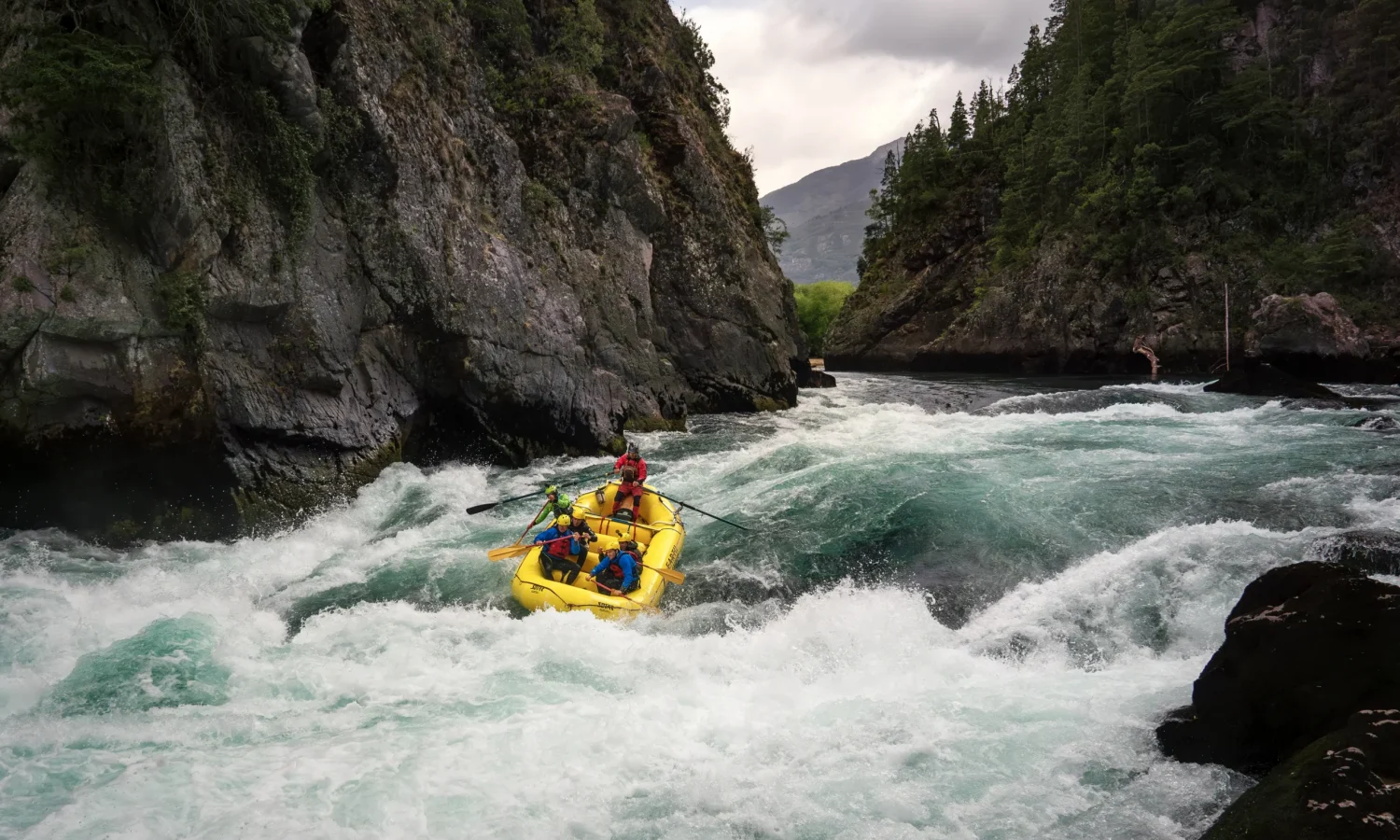
Las Escalas/The Wild Mile (Class IV)
Below Inferno Canyon, the river opens into the wide, flat valley of Las Escalas, a popular stretch for fly fishing with two unnamed Class II rapids and exceptional views of the surrounding peaks.
The character of the section changes dramatically at Zeta, one of the most visually extraordinary rapids on earth. The entire river compresses through a 40-foot-deep granite chasm, forming a perfect Z-shaped channel of surreal turquoise water and sculpted bedrock. Zeta is a portage for all commercial rafting companies, a Class V+ rapid with consequences that make it un-runnable with guests. Earth River guides portage the boats through while guests hike the canyon rim above, looking down into one of the most spectacular pieces of whitewater geology anywhere in the world.
Below Zeta, granite monoliths rise from the turquoise water alongside untouched old growth forest before the river arrives at Throne Room, the second commercial portage on the Futaleufú. A steep, powerful Class V+ rapid with massive hydraulics, Throne Room takes its name from the iconic Throne Rock sitting nearly 25 feet above the water at the bottom center of the rapid. Guests hike to a viewpoint on river left above the rapid while guides push the boats through empty and swim for them at the bottom of the rapid.
After Throne Room, the section transitions into the Wild Mile, a sustained stretch of Class III and IV whitewater where rapids arrive in quick succession with minimal recovery time between them.
Commercial Cutoff: +90
Length: 12 miles
Rapids: In Order English
Hijo De Zeta (Class III/IV)
The first rapid below Inferno Canyon, featuring strong eddy lines and powerful boils characteristic of the Futaleufú’s compressed flow. At gauge readings above +30, a massive retentive hole forms in the center with a sneak line available far river right.
Zeta (Class V+)
The most visually extraordinary rapid on the Futaleufú and arguably on earth. The entire river cuts through a 40-foot-deep granite chasm, forming a perfect Z-shaped channel of sculpted bedrock and surreal turquoise water. A portage for all commercial operators, Zeta is best experienced from the canyon rim above, where the rapid’s scale and geometry are fully visible.
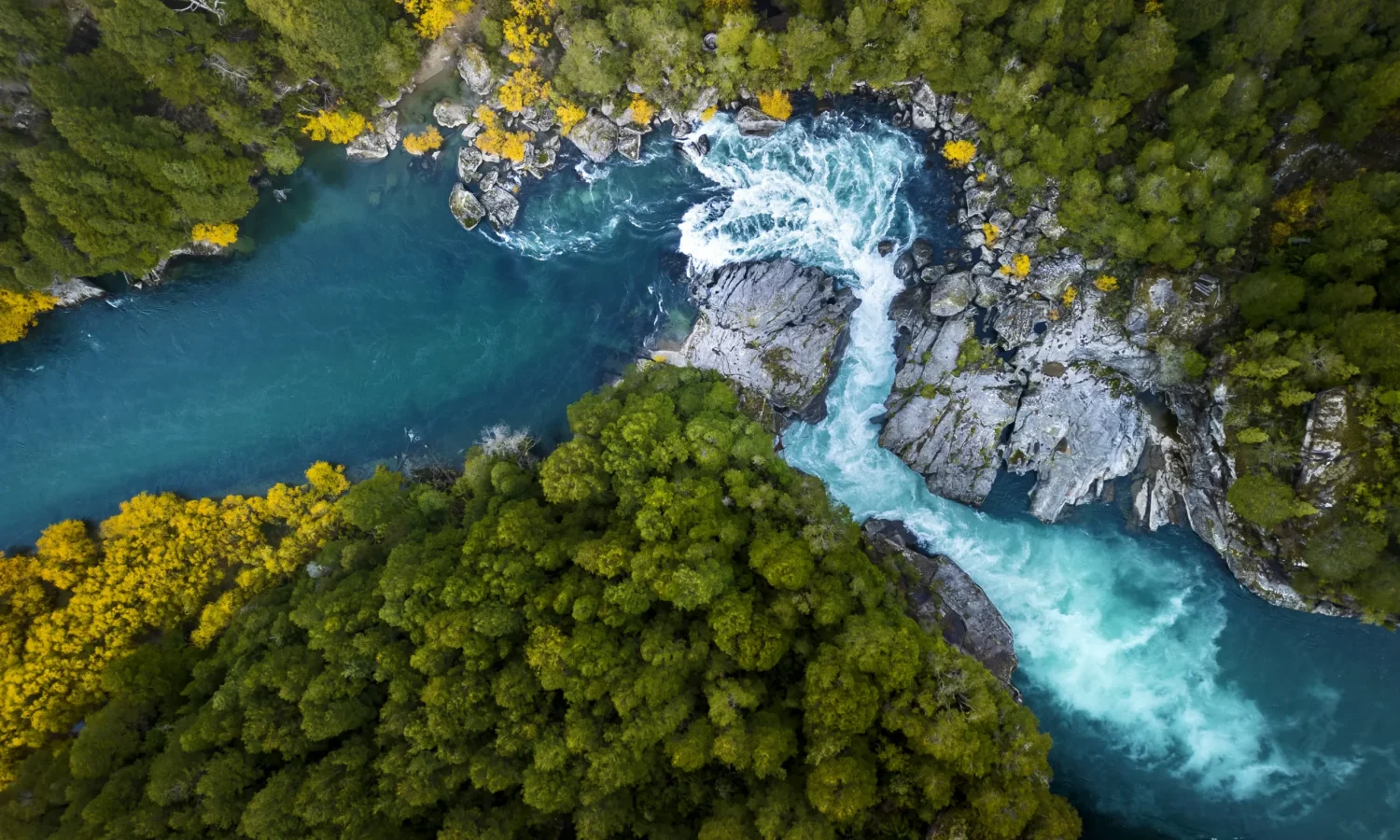
Throne Room (Class V+)
A steep, powerful rapid with massive hydraulics anchored by the Throne Rock, rising nearly 25 feet above the water at the bottom center of the river. The Toaster on river right is known for launching rafts vertically, and a large retentive hole sits on river left. Guests view the rapid from a trail on river left above while guides send the boats through empty and swim for them at the bottom. The pool below offers exceptional swimming.
Island / Isla (Class IV)
A steep rapid characterized by beautiful turquoise tongues of water that draw boats toward a massive wave and hole at the bottom, capable of sending a wall of water over the bow and submerging the entire raft momentarily. (Named by Earth River)
Offset Holes (Class IV)
A dynamic move requiring guides to split two large hydraulics from right to left in quick succession. A mistake here means entering the next rapid out of control, which is precisely how that rapid got its name. (Named by Earth River)
Chaos (Class IV)
A wave train leading to an awkward center move that is difficult to line up correctly. A shallow rock on center right is prone to catching the guide’s seat and launching them forwards into the boat, and a sticky hole sits on river left. The rapid finishes with a clean wave train below. (Named by Earth Ri
The Thing / La Cosa (Class IV)
A wave train that funnels into a narrowing canyon corridor, where the compressed current generates two large dynamic holes that build and disappear with the river’s pulse. The constriction also produces some of the biggest whirlpools on the entire river. (Named by Earth River)
Azul to Bridge to Bridge (Class IV- V)
This section begins at the confluence of the Futaleufú and Azul rivers, where day-trip companies start their full-day on-the-water trips. It is here that Terminator sits, the rapid that ended Steve Currey’s first expedition in 1985 and has remained the defining test of this river ever since. Considerable in length, consequence, and technical difficulty for a river of this volume, it is runnable by raft only by experienced guides with proper safety infrastructure in place. Earth River guides have been running Terminator for over three decades. A trail runs alongside the rapid for guests who choose to walk around and rejoin the group below.
After Terminator, three Class IV+ rapids follow in quick succession before a flat section leads to the Bridge to Bridge put in.
Commercial Cutoff: +45
Length: 6 miles
Rapids: In Order English
Asleep at the Wheel / Dormido Al Volante (Class IV)
A long, dynamic rapid with one of the biggest hydraulics on the river sitting center, easily avoided by moving to river right. It earned its name on the first descent in 1990. After the intensity of Inferno Canyon, the portages of Zeta and Throne Room, and the sustained action of the Wild Mile, the river goes completely flat for several miles before this rapid arrives with no warning. On the first descent, a guide flipped his boat in what appeared to be a straightforward rapid, and the name wrote itself. (Named by Earth River)
Terminator (Class V)
Close to a mile long including its entrance, Terminator is the single biggest rapid on the Futaleufú. At the top, the gradient is steep enough to produce a full horizon line, the river disappearing from view before the drop reveals itself. The rapid is littered with massive granite boulders, and the standard line moves downriver left, threading rocks and holes to reach the Scout Eddy at the halfway point. From there, the hardest move awaits: the Goal Posts, a massive drop followed immediately by a powerful wave and hole. Below the Goal Posts, the river drives into the Typewriter, a lateral hole extending from river left that surfs the boat downstream along its length before releasing at the bottom. It was here that Steve Currey’s 1985 expedition ended. Earth River guides have been running it since 1990.
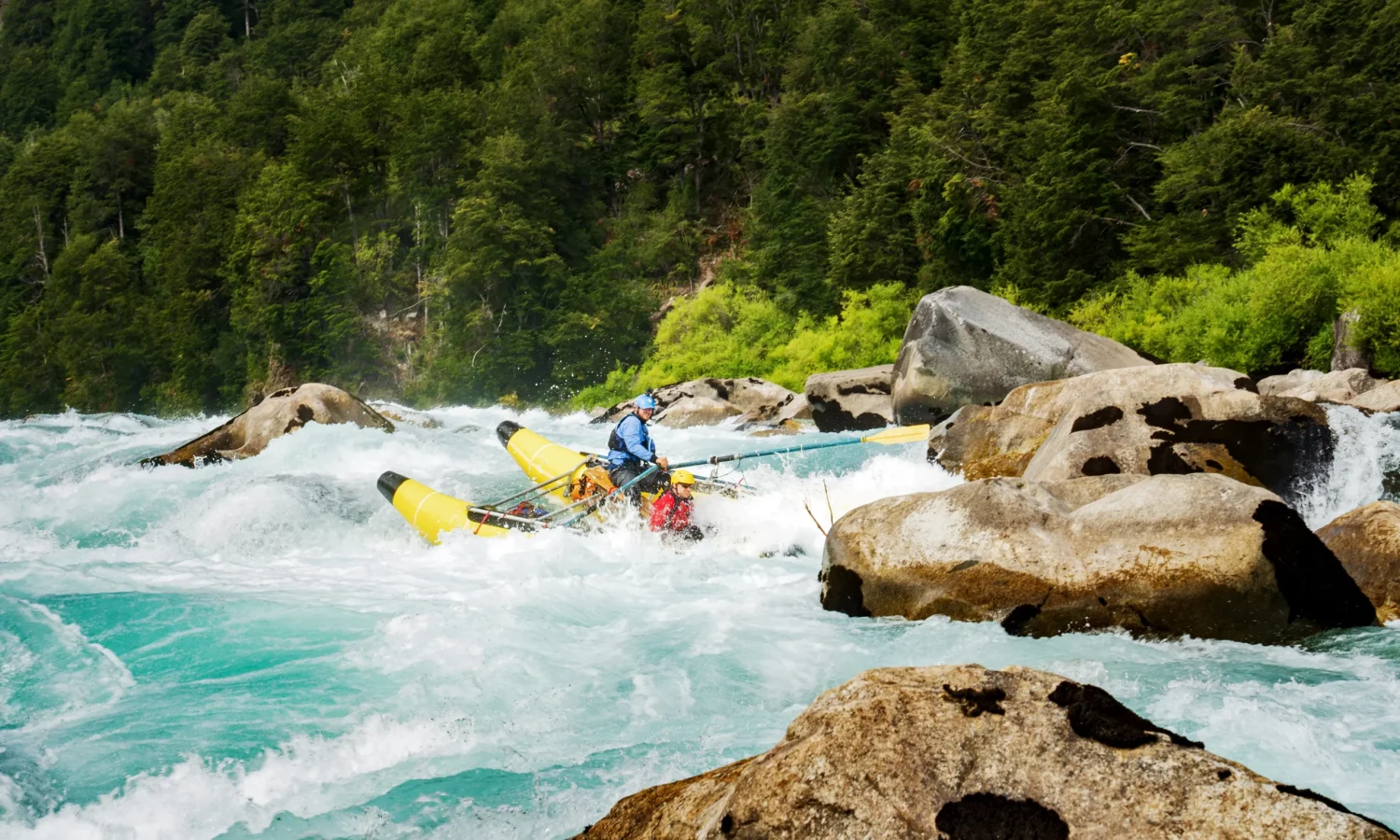
Kyburz Pass (Class IV+)
A technical rapid with large features requiring precise navigation. On river left sits the China Hole, a no-go zone with recirculating hydraulics that demand early positioning to avoid.
Himalayas (Class IV)
The biggest standing wave train on the Futaleufú, a straightforward rapid best enjoyed by pointing the boat down the middle and holding on. The scale of the waves makes it one of the most visually dramatic moments on the river despite its relatively forgiving nature. A clean pool below provides easy recovery.
Bridge to Bridge (Class IV–V)
First descended by Earth River in 1990, the Bridge to Bridge section is the core of commercial rafting on the Futaleufú, accounting for over 90% of all commercial rafting participants on the river. Running six miles from the Swinging Bridge to the Puente Futaleufú, it is a sustained stretch of Class IV whitewater where rapids arrive with minimal recovery time between them, which is precisely why the safety cataraft became standard practice on this river. Earth River runs Bridge to Bridge on the first day of its week-long trip, using it as a training day to prepare guests for the more demanding sections above.
Water level dependent, the final stretch of the section extends past the Bridge to Bridge takeout to include Mas o Menos and Casa de Piedra, two Class V rapids available to guests who qualify on the last day of the trip.
Commercial Cutoff: +100
Mas o Menos and Casa de Piedra Cutoff: +60
Length: 6 miles, 7.5 miles including Mas o Menos and Casa de Piedra
Rapids: In Order English
Entrance / Entrada (Class IV)
A long rapid with large waves and hydraulics. The primary hazard is a picket fence of rocks extending from the center of the river to river right. Lines exist through it, but the safest route stays all the way river left. (Named by Earth River)
Toboggán (Class IV)
The right channel of an island rapid, intimidating in appearance but relatively straightforward in execution. The line runs more or less down the middle through large waves, finishing by splitting two substantial holes at the bottom.
Mas o Mas (Class IV+)
The left channel of the same island. A large wave train with powerful water pulling toward river left as the river bends right, with ledge holes forming in the center. Staying inside the bend is critical as the outside wall ends in a sieve pile. (Named by Earth River)
Pillow / El Cojín (Class IV)
A short, powerful rapid that lines up toward a high lateral wave breaking off the Pillow Rock, with a large lateral hole sitting directly below it. The line runs straight down the middle, using the lateral wave to generate one of the biggest splashes on the river.
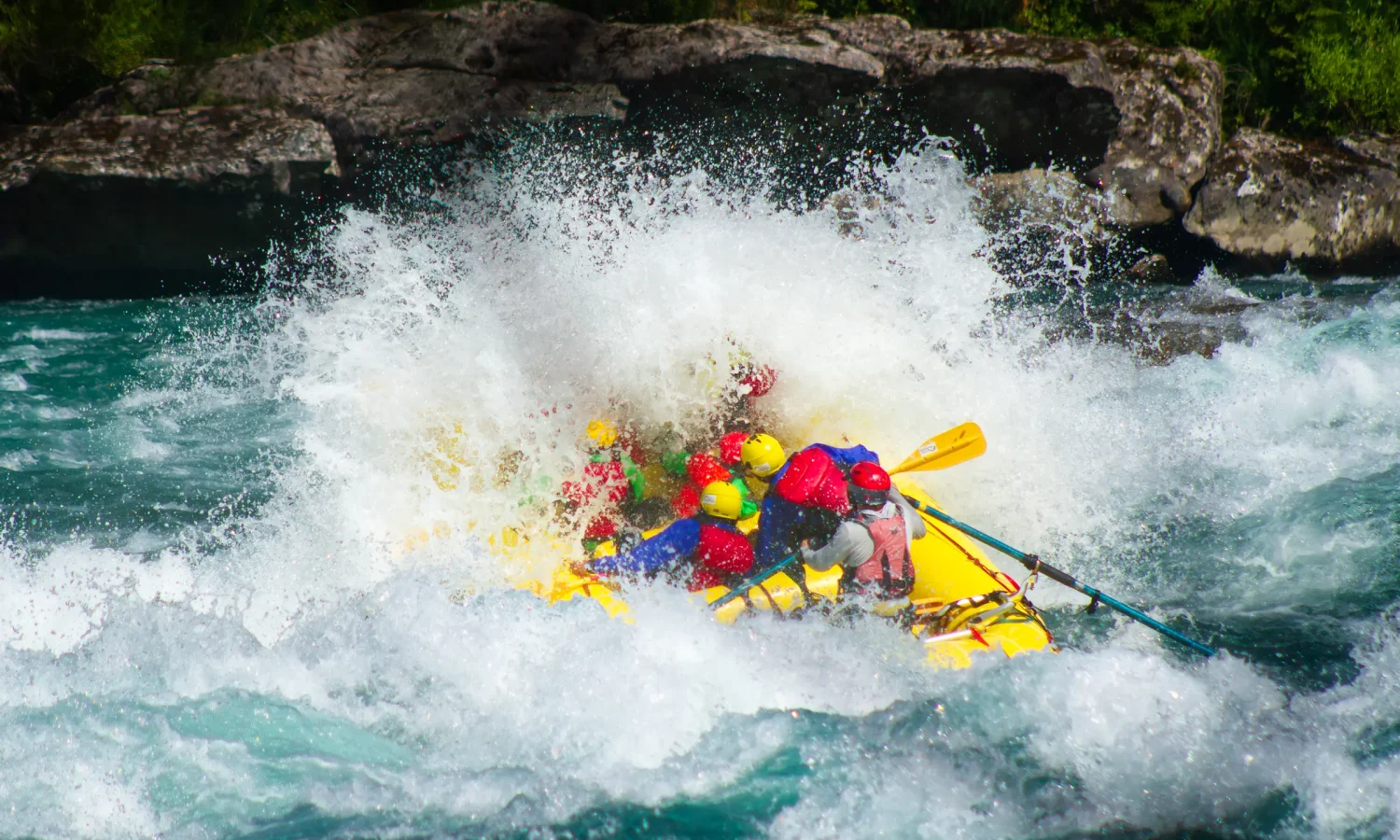
Magic Carpet / Alfombra Mágica (Class III+)
A wave train with a large eddy running alongside it, allowing guides to pull in and run the rapid repeatedly. The eddy access and the line’s repeatability are what gave it its name. (Named by Earth River)
The Bull / Toro (Class IV)
A wave train with a large hole on river left that requires boats to exit the current moving toward river right, catching an eddy before dropping into Mundaca directly below.
Mundaca (Class IV+)
The largest and most consequential rapid on the Bridge to Bridge section. A steep, complicated drop with massive holes and strong lateral waves that funnel everything toward the Mundaca Hole at the bottom, the most frequent flip point on the Futaleufú. Despite its reputation, the bottom hole is avoidable with proper positioning, and a long recovery pool below gives guides time to regroup before the next set of rapids.
Pudu (Class IV)
A two part rapid named for the smallest deer species in the Americas, one of the endangered animals the canyon was named to protect. The bottom half is run on river left to avoid a large hole in the center. (Named by Earth River)
Puma (Class IV)
One of the biggest wave trains on the river, with clean lines available on both river right and river left. The center line is avoided before Guina, the subsequent rapid, where arriving out of position significantly compounds the difficulty. (Named by Earth River)
Guina (Class IV)
The most dynamic rapid on the section and at high water one of the biggest on the river. Named for the smallest wild cat in the Western Hemisphere, another of the endangered canyon animals. A series of lateral waves requires precise setup at the top, leading into a large wave train at the bottom. (Named by Earth River)
Condor (Class III)
A straightforward wave train entering center left and driving down the middle. Named for the Andean condor, which still circles above the valley it was named to protect. (Named by Earth River)
Tiburón (Class IV)
A wave train terminating at a headwall with a known undercut on river left, one of the most significant hazards on the Futaleufú. Guides commit to river right early and hold that position through the entire rapid. (Named by Earth River)
More or Less / Más o Menos (Class V)
A long, powerful rapid with enormous holes and waves capable of standing a raft vertically. Two lines exist: straight down the middle through the largest features, or the line Earth River takes, entering center right to avoid the top crashing waves before moving back toward center after the biggest hydraulics have passed. The length of the rapid and the consequence of the bottom features make this one of the most technically demanding runs on the river. (Named by Earth River)
Casa de Piedra (Class V)
This rapid translates as House of Rock, though no one uses the English name and it is known internationally by its Spanish. The last Class V on the Futaleufú and one of its most scenic, Casa de Piedra begins with a technical entrance on river right, threading between boulders with every channel pointing directly at the Casa, a single rock rising nearly 50 feet from the center of the river. After the first channel, guides back off the Casa rock and move downstream into a boulder garden with a single viable line. The Airplane Move follows, a steep drop beside a hole just to the left, where guides use the recirculating water on the stern to pull the boat toward river right and clear a triangular rock below. From there the rapid opens into waves and holes before finishing at the Manhole, a large feature at the bottom center that remains a flip risk even at the end of the rapid.
Macal Section (Class III)
After Casa de Piedra, the river opens into the Macal section, a 3-mile stretch of Class III water where the canyon walls recede, and the full scale of the surrounding Andes becomes visible for the first time. Jagged, glacier-capped peaks extend in every direction. For intermediate kayakers, the Macal offers practice water including a quality surf wave with reliable eddy access. For rafters, it is a gradual transition out of the technical demands of the sections above, ending at a secluded sand beach where Earth River stops for lunch before the takeout near Lago Yelcho.
Commercial Cutoff: +100
Length: 3 miles
Wennamapu (Class III)
A wave train whose name comes from the Mapuche phrase meaning where heaven meets earth. As the rapid finishes, the valley opens to unobstructed views of glacial peaks in every direction, a fitting end to the commercially run Futaleufú. (Named by Earth River)
The Espolón and Azul Rivers (Class II–III)
The Futaleufú’s two primary tributaries offer a complete contrast to the main river and form the core of Earth River’s multi-sport days.
Río Espolón (Class II, III)
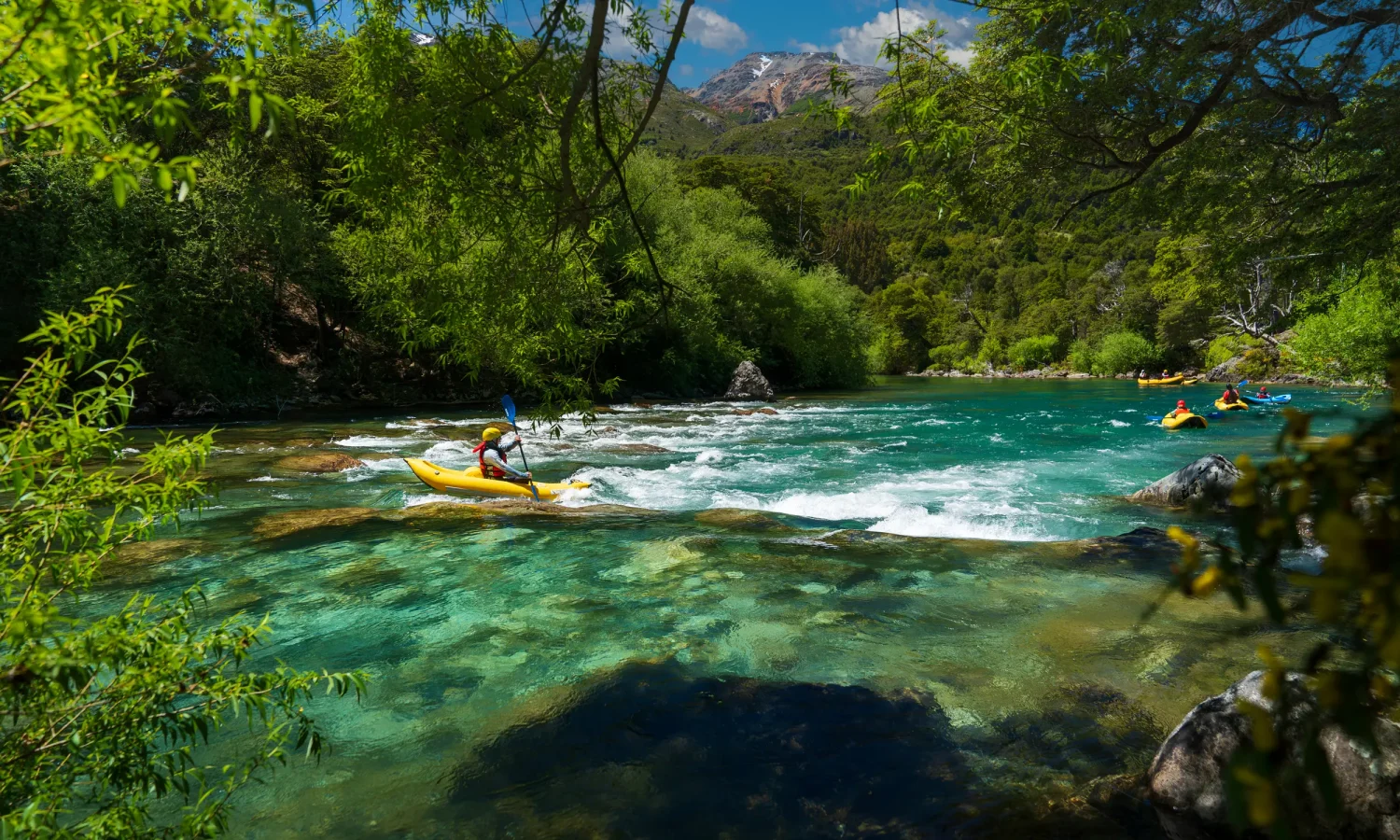
Running approximately six miles through an open valley past the town of Futaleufú, the Espolón is a wider, gentler river with crystal clear green water and big unobstructed views of the surrounding peaks. The rapids are boulder gardens that require guests to maneuver around rocks and holes in deep, defined channels. A beautiful surf wave called La Ola sits mid-river, one of the most playful features on either tributary. The section finishes with Tocoyan, a Class III rapid that serves as a natural skills assessment before guests move to the Azul. The Espolón is suitable for any guest in an inflatable kayak regardless of prior paddling experience. A small guided raft is available to anyone who wants one.
Río Azul (Class III)
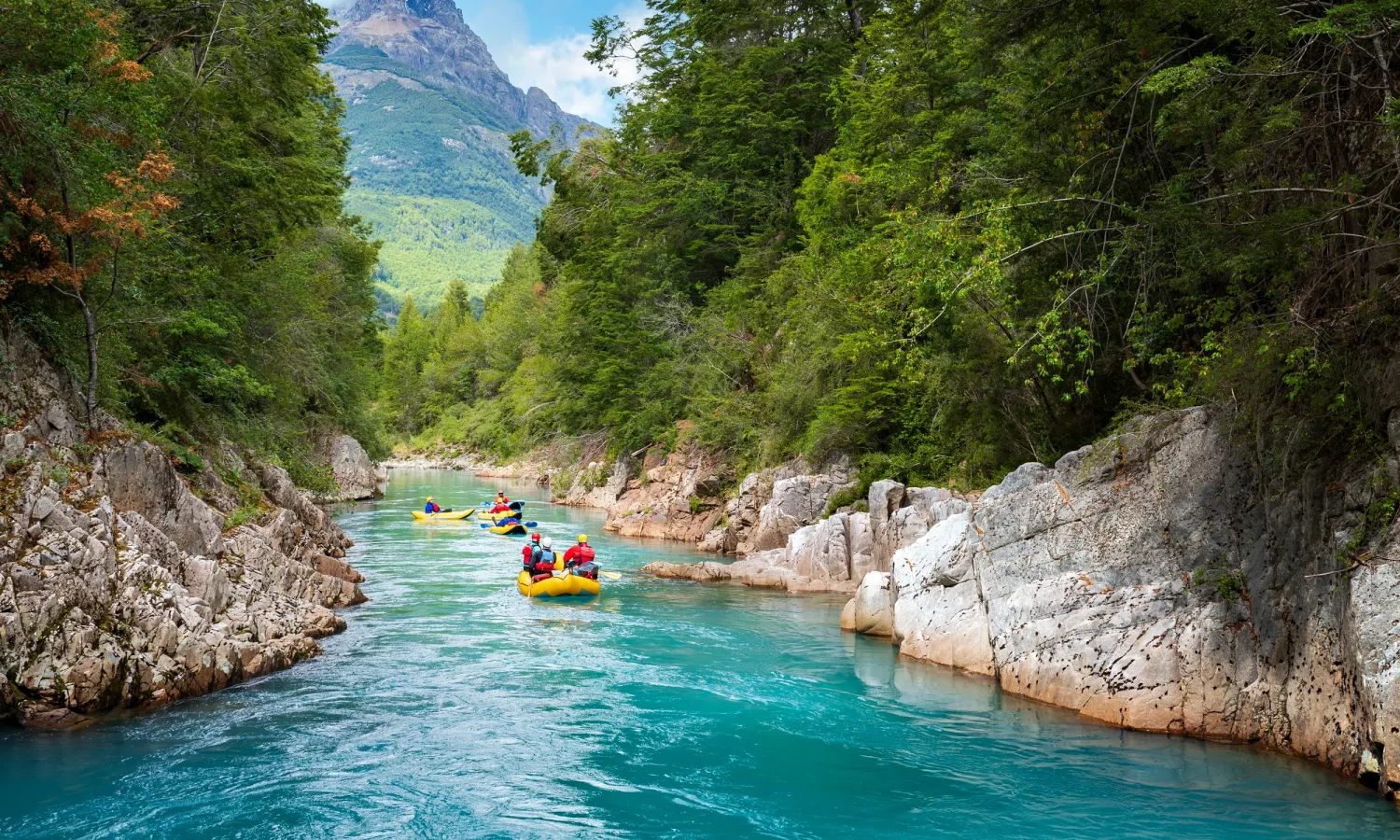
Steeper, narrower, and more technically demanding than the Espolón, the Azul runs approximately six miles through a series of shallow channels and steep drops that intensify as the river enters its main canyon. The canyon walls are reddish-white granite, creating a striking visual contrast against the glacial-blue water flowing through them. At higher water levels, several rapids push into Class IV territory. Earth River requires guests to demonstrate solid boat control on the Espolón before moving to the Azul in an inflatable kayak. Guests who do not receive guide approval paddle the Azul in a small raft with a guide instead. The mountain scenery in the Azul canyon is among the most dramatic anywhere in the Futaleufú Valley.
When to Go: A Month-by-Month Guide
The Futaleufú rafting season runs from December through March, corresponding to the Southern Hemisphere summer. Each month has a distinct character shaped primarily by water levels rather than temperature, which remains consistently warm throughout the season.
December
The earliest month of the season and the one with the most variable water. Snowmelt and higher rainfall can combine to push the river above Class V operating thresholds, meaning that Inferno Canyon and Terminator can be too high to run safely. Bridge to Bridge, the Wild Mile, and the optional Class V rapids Mas o Menos and Casa de Piedra remain runnable at these levels, offering a full and demanding day on the water. December departures, particularly the holiday weeks, are among the most popular of the season as guests coordinate around school breaks and vacation schedules.
January
Water levels stabilize after the early season rains, and all sections become consistently runnable. Daytime temperatures regularly reach 75 to 85°F in the valley. January is particularly well suited for the tributary days, with the Espolón and Azul running at their best levels for inflatable kayaking, fast enough to be engaging but low enough to be technically precise. For guests who want the complete Earth River multi-sport experience across every activity, January is the ideal month.
February
The prime month of the Futaleufú season for both weather and water. Levels stabilize further after January; the valley reaches its driest and sunniest stretch of the year, and the main river runs with exceptional clarity at an optimal volume across all sections. Daytime temperatures consistently reach 75 to 85°F. The combination of reliable weather, stable water, and the full range of Class IV and V options consistently available makes February the month that experienced guides and repeat guests most often choose when they have flexibility.
March
The final month of the season. Water levels and wildlife remain comparable to February, and temperatures stay warm through most of the month. Days shorten perceptibly toward the end of March, giving the valley a different quality of light in the late afternoon. March departures tend to be quieter and more intimate as the season winds down.
For a more detailed breakdown of what to expect each month, see our complete Futaleufú season guide
Water Temperature
The Futaleufú originates from glacial lakes on the Argentine side of the Andes, which would suggest dangerously cold water. It is not. Because the lakes drain slowly and the water carries exceptional clarity with minimal suspended sediment, sunlight penetrates deep into the water column, warming it significantly before it reaches the commercial rafting sections. By the time guests are on the river, water temperatures run consistently in the low to mid 60s Fahrenheit, warm by the standards of any glacially fed river in the world. A wetsuit is provided and worn on all rafting days.
How to Get to the Futaleufú
There are two primary routes to the Futaleufú Valley from North America.
Via Chile (Earth River's Primary Route)
Fly from your home city to Santiago, Chile, then connect to Puerto Montt on a domestic flight of approximately 1.5 hours. From Puerto Montt, a short taxi transfer brings you to Puerto Varas, a lakeside town on Lago Llanquihue where Earth River guests spend their first night at the Wyndham Pettra Hotel with views of Osorno Volcano across the water.
The following morning, a 40-minute charter flight from Puerto Varas to Chaitén, a small fishing village on the Patagonian coast, is followed by a two-hour bus ride east through hanging glaciers and deep blue lakes to the Futaleufú Valley. Total travel time from the U.S. is approximately two days each way. Earth River trips run nine days on the ground, eleven days total including travel.
Via Argentina
An alternative route for guests combining the Futaleufú with broader Patagonian travel. Fly to Buenos Aires, then connect to Esquel in Argentine Patagonia. From Esquel, a two-hour drive crosses the Andes to Futaleufú, Chile. The border crossing is straightforward for U.S. and Canadian passport holders, with no visa required for stays of up to 90 days.
Who Can Do This Trip?
The most common misconception about the Futaleufú is that it is only for expert rafters. On an Earth River trip, it is not.
Earth River has guided guests from age 6 to 85 on the Futaleufú. Every activity on the trip, including all rafting, is optional. Guests who prefer not to run Class V sections are walked or driven around depending on the section. Guests for whom the guides determine a safety cataraft is the appropriate vessel run alongside the rafts under direct guide supervision. On hike days, alternative activities including fishing and horseback riding are available.
Physical requirements: Guests should be comfortable being active for two to five hours per day. The most physically demanding day is the hike to Lago Obsession, which has a shorter alternative for guests who prefer it. Guests who opt out of a day’s activity entirely remain at the lodge.
Rafting experience: No prior rafting experience is required. Earth River guides provide instruction and practice time before any challenging water. Access to Class V rapids requires passing an in-water safety assessment administered by Earth River guides. Guides make the final determination on which sections each guest runs.
Age: Children as young as 6 have completed the trip, typically running just the class III sections in a safety cataraft under direct guide supervision.
Solo travelers: Earth River welcomes solo travelers and works to match them with compatible group members. A single supplement applies for private room accommodation.
The Lodge Experience: What Makes Earth River Different
Earth River operates the only lodge-to-lodge trip on the Futaleufú River. Every other outfitter on the river uses a base camp or glamping-style accommodation. Earth River guests spend every night in a private room at a boutique lodge with en-suite bathrooms, chef-prepared meals, and wood-fired hot tubs.
The trip moves through four properties over the course of eleven days, each with its own distinct character.
Night 1, Wyndham Pettra Hotel, Puerto Varas:
A lakeside property on Lago Llanquihue with spa, pool, and panoramic views of Osorno Volcano across the water. The first night of the trip before the charter flight to Chaitén.
Nights 2, 3, and 4, Lonconao Cottages:
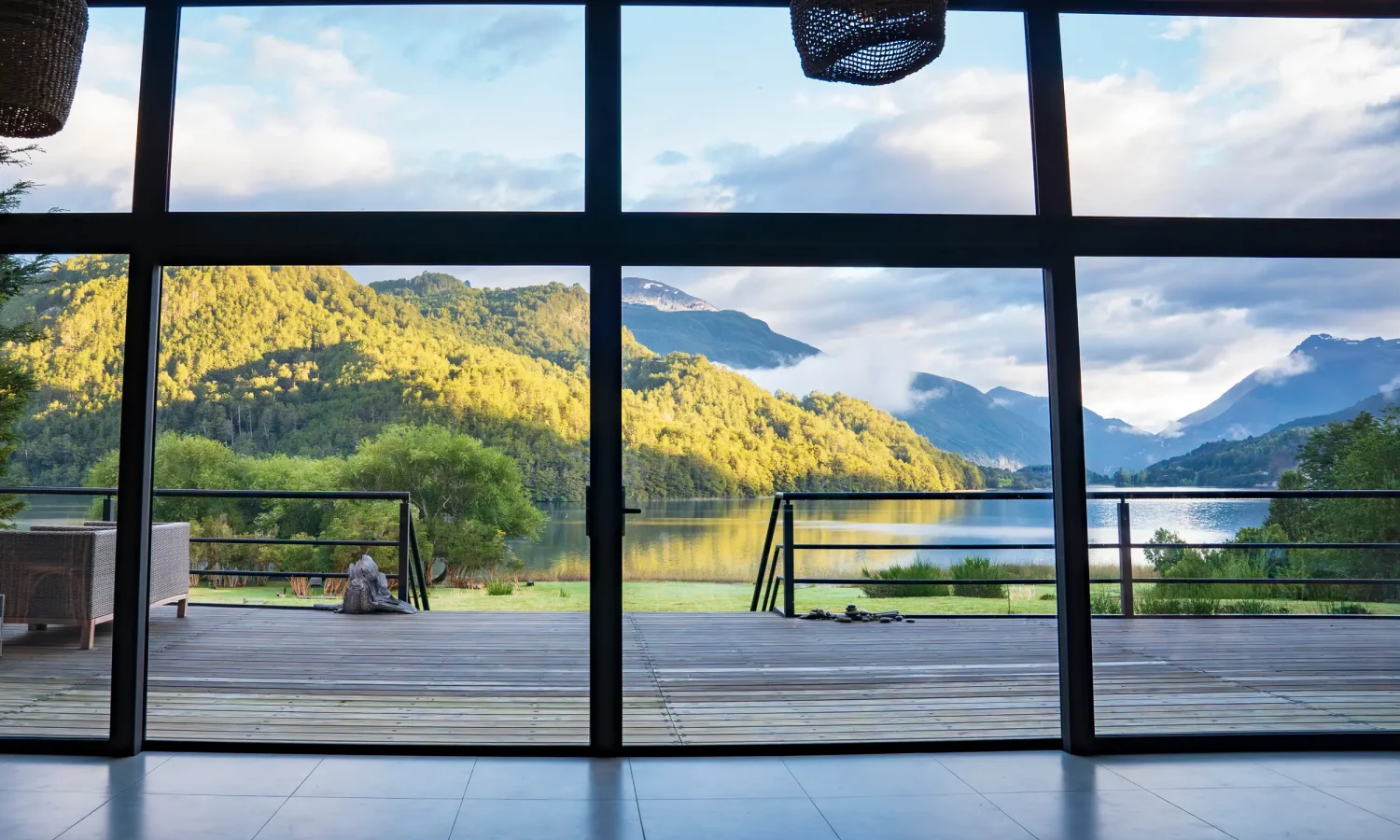
Set on 600 acres on the shores of Lago Lonconao. Each 800-square-foot cottage has two bedrooms, two private bathrooms, a central living area, and full-wall windows overlooking the lake and surrounding peaks. The main dining room has floor-to-ceiling picture windows and a full wall stone fireplace.
Nights 5, 6, and 7, Peuma Eco Lodge:
Set on 800 acres of old-growth hardwood forest. Nine heated hexagonal cabins, each with private bathrooms, open onto a central living and dining area with a deck, two wood-fired hot tubs, and views of granite spires rising 6,000 feet above the valley. The Lago Obsession trailhead begins at the lodge.

Night 8, Yelcho Lodge:
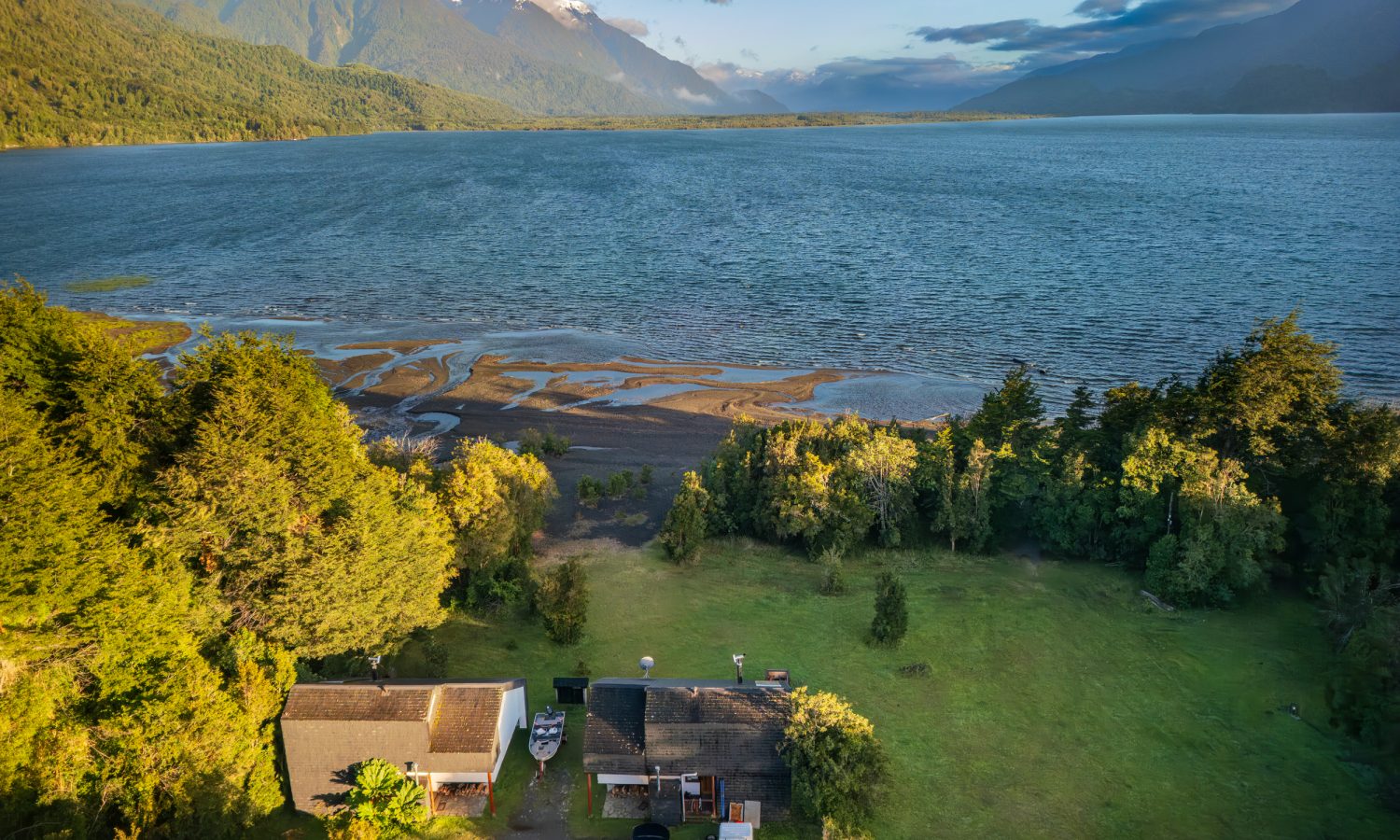
On the shore of Lago Yelcho, a 17-mile glacial lake fed by the Futaleufú River, framed by glacier-capped peaks. The final night of the trip before departure, positioned to eliminate an early morning rush to the airport.
Earth River completed the first full raft descent of the Futaleufú River in February of 1990. We named Inferno, Purgatory, Jacob’s Ladder, Mas o Menos, and most of the rapids that every guide on this river calls by name today. We pioneered the safety cataraft that is now standard equipment for every commercial outfitter operating here. We have maintained a flawless safety record on this river for 36 consecutive years. And we have worked to keep this river free flowing for longer than most companies on the Futaleufú have existed. The Futaleufú is not a destination we discovered and moved on from; it is the river we have devoted our professional lives to, in every sense, since the day we first ran it.
Earth River runs the only lodge-to-lodge trip on the Futaleufú. Trip rates and dates are on our Futaleufú multi-lodge trip page.